

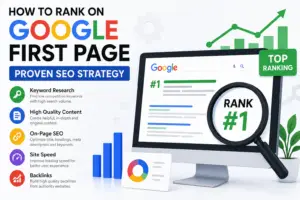
How to Reach Google’s First Page in 2026: Smart SEO Technique That Works
Getting your website onto Google’s first page is one of the best ways to increase traffic, build trust, and grow your business online. The positive aspect is that achieving a higher ranking in 2026 is still feasible if you concentrate on the right strategy.
SEO has changed a lot over the years. Search engines now reward websites that provide clear answers, useful information, and a strong user experience. That means low-quality articles and keyword stuffing no longer work.
If you want faster rankings, here is a practical approach that can help.
Understand Why Many Websites Struggle to Rank
A large number of sites publish content without any real plan. They choose overly competitive keywords, create short, low-value articles, or ignore what users are actually searching for.
To rank well, your content should match search intent and solve a real problem better than competing pages.
Successful websites usually focus on:
- Well-researched keywords
- Helpful and original clent
- Clean on-page design SEO
- Logical internal linking
- Fast loading speed
- Consistent publishing
Choose Keywords You Can Actually Rank For
Many beginners target broad terms like “SEO” or “marketing.” These keywords are difficult because established websites already dominate them.
Instead, focus on specific search phrases with lower competition, such as:
- best SEO tools for small websites
- How to improve Google rankings quickly
- Beginner SEO tips for blogs
- increase website traffic organically
These targeted phrases often bring more qualified visitors and are easier to rank for.
Publish Better Content Than Competitors
Before writing, search your keyword and study the top results. Then create something more useful.
Ways to improve your article:
- Add updated information
- Explain the steps clearly
- Use real examples
- Include FAQs
- Improve formatting for readability
- Add images or visuals
- Keep the content practical
Choose Keywords You Can Actually Rank For
Many beginners target broad terms like “SEO” or “marketing.” These keywords are difficult because established websites already dominate them.
Instead, focus on specific search phrases with lower competition, such as:
- Best SEO tools for small websites
- How to improve Google rankings quickly
- Beginner SEO tips for blogs
- Increase website traffic organically
These targeted phrases often bring more qualified visitors and are easier to rank for.
Publish Better Content Than Competitors
Before writing, search your keyword and study the top results. Then create something more useful.
Ways to improve your article:
- Add updated information
- Explain steps clearly
- Use real examples
- Include FAQs
- Improve formatting for readability
- Add images or visuals
- Keep the content practical
Your goal is simple: make your page the most helpful result.
Optimize Every Page Properly
Strong content matters most, but optimization still plays a key role.
Make sure you include:
- A compelling title with the main keyword
- Short, clean URL
- Clear headings (H1, H2, H3)
- The keyword naturally appears in the introduction
- Meta description that encourages clicks
- Image alt text where relevant
Avoid overusing keywords. Write naturally for people first.
Use Internal Links to Build Strength
Link related articles together across your website. This helps visitors discover more content and helps search engines understand your site structure.
For example, if you publish an article about keyword research, link it to articles about on-page SEO, backlinks, and content writing.
Over time, this creates topical authority.
Improve Website Speed and Mobile Experience
So your website’s slowness can hurt rankings and increase bounce rate.
Focus on:
- Compressing images
- Using lightweight themes
- Removing unnecessary plugins
- Enabling caching
- Making pages mobile-friendly
Visitors stay longer when your site feels fast and easy to use.
Be Consistent With Content Publishing
Ranking rarely happens overnight. Websites that publish useful content regularly often grow faster than those that post once and disappear.
Even one strong article each week can make a difference over time.
Consistency builds authority, trust, and more ranking opportunities.
A Powerful Strategy: Build Topic Clusters
Instead of posting random content, build groups of related articles around one niche.
For an SEO website, this might include:
- Keyword research guide
- Link building tips
- Technical SEO basics
- On-page SEO checklist
- Best SEO tools review
This structure helps search engines recognize your expertise.
Niches That Often Perform Well
If you are starting a new website, consider evergreen or growing topics like:
- AI tools
- Personal finance
- Technology reviews
- Education
- Freelancing
- Gaming guides
- Career advice
Choose a niche you can consistently create content for.
Final Thoughts
Reaching Google’s first page in 2026 is still possible, but it requires a smarter approach than before.
Focus on keywords you can win, create genuinely useful content, optimize your pages properly, and stay consistent. When you help users better than competitors, rankings often follow.
If you tell me your website niche, I can also give you 10 unique keyword ideas and article topics with ranking potential.





You made a solid point about search intent being more important than just targeting high-volume keywords. A lot of websites still focus on publishing more content instead of creating pages that actually solve user problems and keep visitors engaged. I’d also add that updating older content regularly can make a big difference for maintaining first-page rankings in competitive niches.